Flip Culture: Inside the Shadow Economy Quietly Running Behind Your Favorite Merch Drops
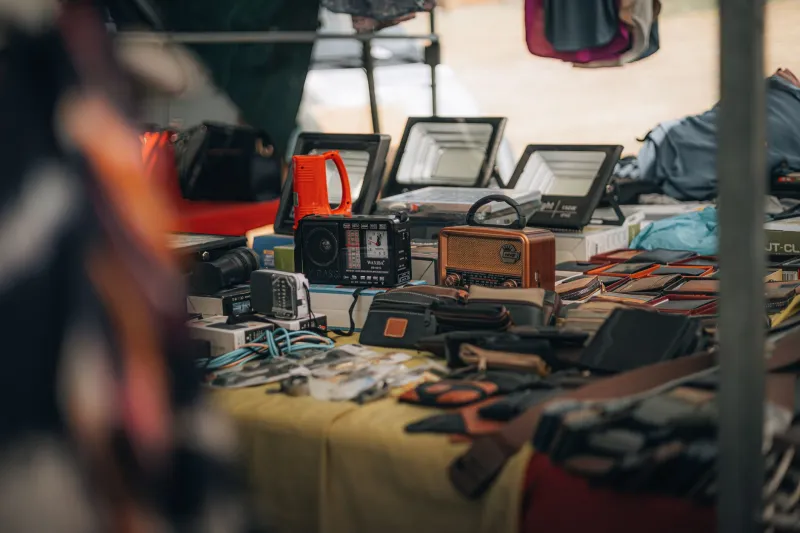
The drop goes live. You refresh the page. You get your size in the cart, fumble through checkout, and somehow — miraculously — you land the piece. But before you've even gotten a shipping confirmation, someone else has already listed that exact item on eBay for three times what you paid.
Welcome to the resale layer of creator merch culture. It's been building for years, and right now, it's louder than ever.
It Didn't Start With Streetwear, But Streetwear Taught Everyone the Rules
Supreme. Off-White. Yeezy. The blueprint for scarcity-driven resale culture was written in the streetwear world long before creator merchandise entered the conversation. Limited runs, intentional scarcity, and a fanbase hungry for exclusivity — those ingredients were always going to produce a secondary market. What nobody predicted was how seamlessly that same playbook would migrate into the creator economy.
When a YouTuber drops 200 units of a hoodie and it sells out in eleven minutes, the economics get interesting fast. Suddenly that hoodie isn't just a piece of fan gear. It's a commodity. And commodities, as anyone who's ever watched a stock ticker knows, get traded.
The Platforms Where It All Goes Down
eBay is the obvious starting point — it's still the most searchable and accessible resale marketplace for creator merch. But the more interesting action? It's happening in places most people never see.
Private Discord servers have become the backstage of the merch economy. Some of these communities are surprisingly sophisticated: they track drop histories, monitor pricing trends, and move pieces peer-to-peer without platform fees cutting into margins. Members share insider intel on upcoming releases, debate authentication, and negotiate trades that would make a sports card dealer nod in respect.
Depop and Mercari have also carved out significant space here, particularly for younger fans who prefer a more casual, social-feeling transaction. Poshmark, traditionally a fashion resale platform, has started seeing creator merch pop up more frequently as sellers realize the audience crossover is real.
And then there's the ultra-niche end: private group chats, subreddit threads, and even in-person trades at conventions and meetups. The infrastructure is scattered, but it's surprisingly organized once you know where to look.
Why Fans Are Treating Rare Drops Like Portfolios
Here's the thing that surprises outsiders most: a meaningful chunk of the people buying creator merch aren't planning to wear it. They're planning to hold it.
The logic tracks if you follow the numbers. A limited-run item from a creator at a pivotal career moment — a debut album, a major collab, a milestone anniversary — can appreciate significantly over time. The more the creator's profile grows, the more that early piece becomes a timestamp. And timestamps have value.
Some collectors approach it with genuine financial intention. They research the creator's trajectory, assess the scarcity of the run, and make calculated decisions about what's worth holding versus flipping immediately. It's not so different from the logic behind first-edition book collecting or vintage concert tee hunting — except the timeline is compressed and the market moves faster.
Others stumble into it accidentally. They bought something because they loved it, held onto it through a move or a closet cleanout, and eventually discovered that what cost them $35 is now listed at $140. That's a different kind of financial education.
The Ethics Question Nobody Wants to Answer
Okay, so here's where it gets complicated.
Creators — and shops like this one — design limited drops with intention. Scarcity is often a creative and logistical choice, not a manufactured scheme. But when resellers scoop up inventory specifically to flip it, genuine fans get priced out. The person who actually wanted to wear the piece, who would have displayed it, photographed it, shared it — they lose out to someone treating it like a short-term investment.
Is that wrong? Legally, obviously not. Ethically, it's murkier.
Some creators have started pushing back. Region-locking purchases, implementing one-per-customer limits, using raffles instead of first-come-first-served checkouts — these are all attempts to tilt the odds back toward actual fans. A few have experimented with made-to-order models that eliminate scarcity entirely, though that comes with its own tradeoffs around exclusivity and production timelines.
The honest answer is that there's no clean solution. Scarcity creates desire, desire creates value, and value creates a market. That chain is pretty hard to break without fundamentally changing what makes limited drops feel special in the first place.
What This Means for the Collector Community
For fans who are genuinely in it for the love of the piece — not the profit — the resale economy creates a complicated relationship with collecting.
On one hand, it validates what you already knew: this stuff matters. When someone is willing to pay $200 for a hoodie that retailed at $60, it confirms that the item carries real cultural weight. That's actually kind of affirming if you're a longtime collector.
On the other hand, it changes the vibe. When every drop feels like a potential financial transaction, some of the pure joy of collecting gets diluted. You start second-guessing your own purchases. Is this still about connection, or is it about investment now?
The collectors who seem to navigate this best are the ones who stay clear on their own intentions. They know what they're buying and why. They're not immune to the market dynamics, but they're not letting those dynamics drive the whole experience either.
Where the Market Goes From Here
The creator merch resale economy isn't going anywhere. If anything, it's going to get more organized and more visible as the creator economy itself matures. Authentication services — the kind that already exist for sneakers and trading cards — will likely expand into this space. Blockchain-based ownership verification is already being experimented with in adjacent markets.
For fans, the takeaway is probably this: know what you're walking into. If you're buying because you love the piece and want to own it, great — do that without guilt. If you're buying with an eye toward resale, that's a legitimate choice too, but go in with clear eyes about the ethics and the risks.
And if you miss a drop because someone else got there first? Sometimes the secondary market is actually your friend. That piece you thought was gone forever might just be a Discord search away.
The underground economy of creator merch is real, it's thriving, and it's only going to get more interesting from here. The question is whether you're watching it from the outside — or whether you're already playing the game.