Shrine, Shelf, or Statement: What It Really Means When Fans Put Their Merch on Display
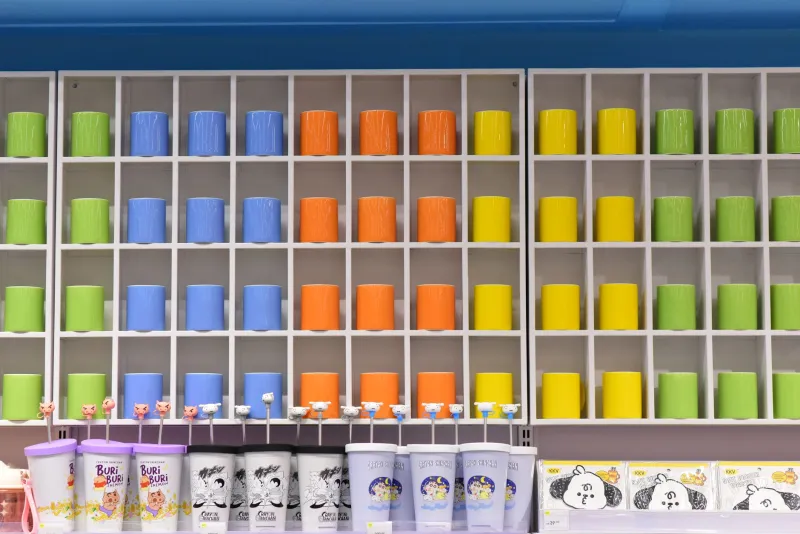
Walk into almost any Gen Z bedroom — or honestly, plenty of millennial home offices too — and you'll notice something right away. It's not just décor. It's a carefully arranged universe of pins, tees, signed prints, and limited-edition drops that tells you exactly who this person is before they've said a single word. Creator merch isn't just sitting around by accident. It's placed. It's intentional. And that intention is worth unpacking.
The way fans display their merchandise has quietly become one of the most fascinating signals in modern fan culture. Whether it's a full bedroom shrine dedicated to a favorite creator, a single enamel pin on a work bag, or a folded hoodie draped over a desk chair like a trophy, each choice carries meaning. And in the age of social media, those choices ripple outward in ways that previous generations of fans never experienced.
The Bedroom as a Fan's First Canvas
Let's start where most fan display culture begins: the bedroom. For a lot of people, this is the original safe space — the one room where you get to decide what goes on the walls, what sits on the shelves, and what version of yourself gets to exist without commentary.
Fans have always decorated their personal spaces with the things they love. But creator merch has added a new layer to this tradition. Unlike a generic band poster you grabbed at a mall kiosk, a limited drop from a creator you've followed for years carries weight. You were there for that drop. You refreshed the page. You knew what it meant when it sold out in four minutes. Displaying that item isn't just decoration — it's documentation.
Social media has amplified this. Room tours, desk setups, and "what's on my shelf" posts have turned personal spaces into curated galleries that thousands of people can visit. Fans aren't just arranging merch for themselves anymore. They're arranging it for an audience, which changes the calculus entirely. The display becomes a broadcast.
From Bedroom to Boardroom: Merch in Professional Spaces
Here's where things get genuinely interesting. Merch has started migrating out of private spaces and into professional ones, and that shift says a lot about how American culture has evolved around fandom.
A decade ago, bringing visible fan gear into a workplace felt like a social risk. You might catch side-eye for the anime figure on your desk or the creator-branded water bottle in the conference room. Fandom was something you kept compartmentalized — for after hours, for conventions, for the corners of life that didn't intersect with your professional identity.
That wall has been crumbling steadily. Today, a tasteful pin from your favorite creator on your laptop bag is practically a conversation starter. A branded mug on a Zoom call background is a personality signal, not an embarrassment. People are increasingly unwilling to perform a version of themselves that strips out the things they genuinely love, and merch is one of the clearest ways to resist that performance.
This isn't just anecdotal. The rise of "bring your whole self to work" culture — however imperfect its execution — has created more room for fan identity to exist in professional spaces. And creators who build merchandise that's designed with that crossover in mind are tapping into something real.
The Psychology of Keeping It Visible
So why does visibility matter so much? Why not just own the merch and keep it tucked away?
Psychologists who study material culture will tell you that objects we keep visible serve as external memory cues and identity anchors. They remind us of who we are, what we value, and where we belong. For fans, creator merch functions in exactly this way. Seeing that hoodie on your chair every morning is a small daily ritual of self-affirmation. It says: this is part of me, and I'm not hiding it.
There's also a community dimension that's easy to underestimate. Displaying merch in shared spaces — a dorm common room, an open-plan office, a coffee shop — is a passive form of signaling. It's how fans find each other. Someone across the room recognizes the logo, the colorway, the design language of a specific drop, and suddenly there's a connection that didn't exist five minutes ago. The merch did the social work before anyone opened their mouth.
This is especially powerful for communities that might otherwise feel scattered or invisible. Fans of niche creators, micro-communities built around specific content verticals, people whose interests don't map neatly onto mainstream culture — for all of them, visible merch is a way of saying we exist, and we're here.
Curated Closets and the Art of Intentional Storage
Not every fan display is about maximum visibility. Some of the most devoted collectors are also the most deliberate about how and when things get shown.
The curated closet approach — where certain pieces are carefully stored, rotated seasonally, or reserved for specific occasions — is its own kind of fandom practice. It treats creator merch with the same reverence that sneakerheads bring to limited-edition shoes or that vinyl collectors bring to rare pressings. The item doesn't lose meaning because it's not always on display. In some cases, the careful storage amplifies the meaning.
This is where fandom starts to intersect seriously with collecting culture. A piece that gets rotated out, kept in its original packaging, or displayed only on meaningful occasions isn't just merchandise anymore. It's an artifact. And the fan who treats it that way is making a statement about value — not just monetary value, but cultural and personal value.
What the Display Era Means for Creator Merch
For creators building their own merchandise lines — and for fans who support those creators by buying in — the display culture moment we're living through is significant.
It means that merch design matters more than ever. Pieces that are beautiful, that hold up visually over time, that carry enough identity to be recognizable without being loud — those are the pieces that end up displayed. Throwaway merch gets worn once and forgotten. Thoughtfully designed merch becomes part of the furniture of someone's life.
It also means that the relationship between creator and fan has a physical, persistent dimension that doesn't go away when the algorithm moves on. A display item is a long-term commitment. It's the fan saying: I'm not just here for the content cycle. I'm here for real.
At Jacqueline Hodge Shop, that's exactly the kind of connection we think about when it comes to what fan merchandise can be. Not just something you buy in a moment of excitement, but something you keep, show off, and come back to — because it actually means something. The display effect is real, and it's only getting more powerful.
So go ahead. Put it where people can see it. That's kind of the whole point.