That One Purchase That Split Your Life Into Before and After

Ask anyone deep in a fandom about their collection, and they'll probably rattle off their favorites pretty easily. But push a little further — ask them which piece started it — and something shifts. The answer gets slower, more careful. Maybe a little emotional. Because for a lot of fans, there's a single merch moment that didn't just mark the beginning of a collection. It marked the beginning of something bigger.
That's the thing nobody really talks about when the conversation turns to creator merchandise. Everyone focuses on the hype, the drops, the sellouts. But underneath all of that is a quieter, more personal story: the one piece that made you feel genuinely seen for the first time.
When a Stranger on the Internet Made You Feel Less Alone
It sounds a little dramatic until it happens to you. You've been following a creator for months — maybe longer. You know their sense of humor, their references, the inside jokes their community runs on. And then they drop something. A hoodie, a pin, a tote bag. And you look at it and think: this is exactly the thing I would have designed if I could have.
That moment of recognition is weirdly powerful. Because it's not just about liking the product. It's about realizing that someone out there — someone who built something you admire — is operating on the same frequency you are. The merch becomes proof of that.
For a lot of fans across the US, that recognition moment arrives during an already-tender stretch of life. A move to a new city where you don't know anyone yet. The messy middle of figuring out your career. A breakup, a loss, a period of reinvention. The timing isn't coincidental. People tend to reach for community hardest when they feel unmoored, and creator merch has a funny way of showing up exactly then.
The Hoodie That Became a Uniform
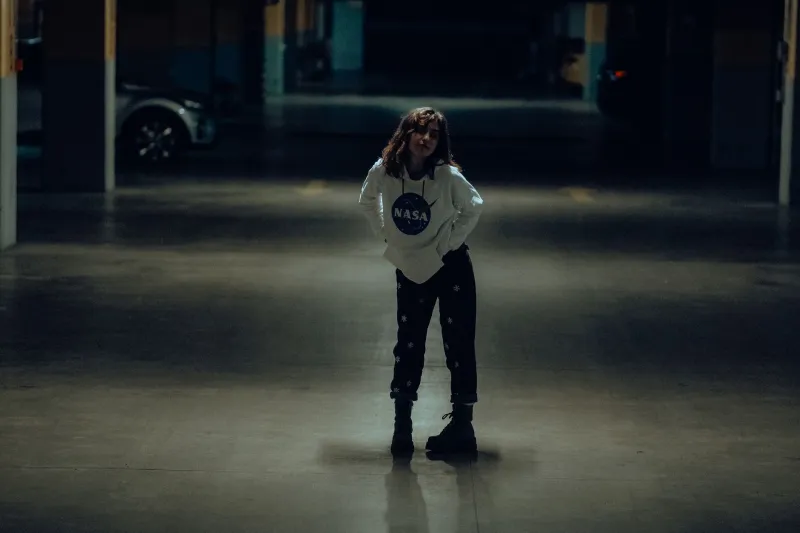
There's a category of merch purchase that fans describe almost like putting on armor. Not because it's protective in any literal sense, but because wearing it changed how they moved through the world. Suddenly they were the person who wore that hoodie. And that small identity shift mattered more than it probably should have.
This is especially true for pieces tied to creators whose work is about something — about honesty, creativity, self-expression, figuring it out in public. When the merch carries that energy, wearing it isn't just a style choice. It's an alignment. You're saying: this is who I'm trying to be. This is the version of myself I'm leaning into.
The first piece in a collection often carries that weight more than anything that comes after. It's the one you wore until the color faded. The one you still have even though you've since bought a dozen other things. Because it arrived at the right moment, and it held that moment in place.
Limited Drops and the Before-and-After Timeline
There's something specific about limited drops that amplifies this effect. When a piece is gone after 48 hours, buying it becomes an event — something that happened on a specific date, tied to a specific chapter of your life. You remember where you were when you saw the notification. You remember the small panic of almost missing it. You remember how it felt when the confirmation email landed.
Unlike an evergreen product you can always go back for, a limited drop creates a timestamp. Five years from now, you'll look at that item and remember exactly who you were when you bought it. That's not a marketing trick — or at least, it's not only a marketing trick. It's a genuine function of scarcity and timing colliding with personal meaning.
Fans who've been collecting creator merch for years often describe their collections as a kind of autobiography. Each piece maps to a period, a mood, a version of themselves. The limited drops are the chapter titles.
Why the Origin Piece Hits Different Than Everything Else
Once a collection grows, it's easy to lose track of what started it. The shelves fill up. The closet gets crowded. But the origin piece — that first thing that made you think I need to own this — tends to hold its status no matter what comes after.
Part of that is nostalgia, sure. But part of it is something more structural. The first piece arrived when the connection between you and a creator was still new and electric. Before it became routine. Before following someone became just another part of your daily scroll. That first merch purchase happened when the feeling was fresh, and it absorbed all of that freshness into itself.
There's also the element of identity formation. When you buy your first piece from a creator you love, you're making a small but real declaration: I'm the kind of person who does this. I'm part of this. That declaration matters. It's the moment you stop being a passive audience member and start being something more active — a fan, a community member, someone with skin in the game.
What It Means to Carry That Piece Forward
The interesting thing about origin merch is that it doesn't stop doing its job just because time passes. If anything, it accumulates meaning. Every time you wear it or see it on your shelf, it pulls you back to that earlier version of yourself — not with regret, but with recognition. I remember that person. I know where she was going.
That's a kind of continuity that's hard to manufacture and impossible to fake. It's why creator merch, at its best, operates on a completely different level than regular branded apparel or generic fan gear. The best pieces aren't just products. They're anchors. They hold something real in place — a feeling, a turning point, a version of yourself you were just beginning to grow into.
And that's the thing about the merch moment that changes everything: you rarely know it's happening while it's happening. You just click the button, wait for the package, and tear it open. The significance settles in later, quietly, the way most important things do.
So if you've got a piece sitting in your collection that feels different from the rest — older, more worn, harder to explain — there's probably a reason for that. It didn't just start your collection. It started something.