Buried in a Box: Why Old Creator Merch Tells the Story of Who You Used to Be
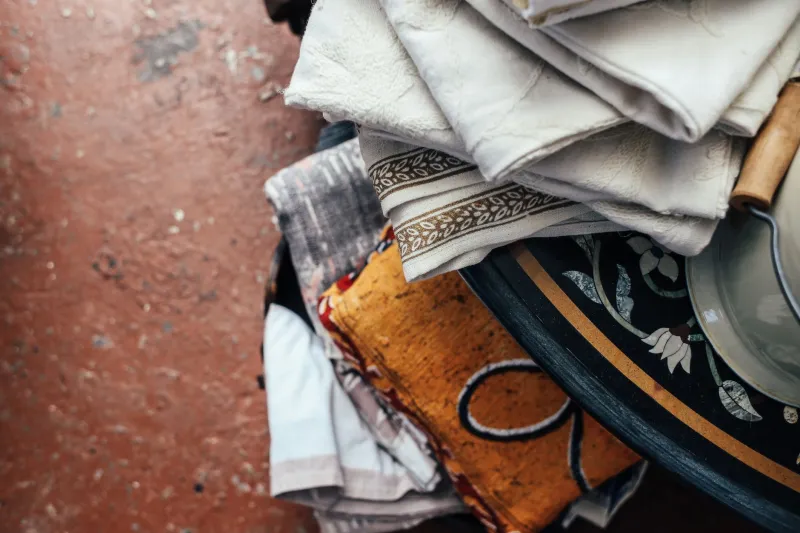
Somewhere in your home, there's probably a drawer, a bin, or a shelf tucked in the back of a closet holding pieces from a different chapter of your life. Maybe it's a tee from a creator who's since pivoted careers, or a limited hoodie from a collab that quietly dissolved. You haven't worn it in years. You're not even sure why you kept it. But you did — and that's the interesting part.
Creator merch has this strange, almost accidental power to function as a personal archive. Not in the polished, Instagram-grid kind of way. More like the way a handwritten journal does — messy, specific, and loaded with context that only you fully understand.
The Photo Doesn't Capture the Whole Thing
Photos freeze a moment. They show you what something looked like, where you were, maybe who you were with. But a worn-in crewneck from a creator's 2019 holiday drop? That thing carries texture. It holds the version of you who stayed up until midnight to snag it before it sold out. It holds the group chat where you and your friends debated sizing. It holds the feeling of opening the package and thinking, yeah, this is exactly right.
There's a tactile, emotional layer to physical objects that digital documentation just doesn't reach. Neuroscientists have long studied how scent and touch trigger deeper memory recall than visual cues alone — and merch operates in exactly that space. Wearing or even just holding an old piece can pull you back to a specific mood, a specific era of your fandom, in a way scrolling through your camera roll rarely does.
Early-Career Drops as Cultural Artifacts
Here's where it gets genuinely fascinating: early-career creator merch is quietly becoming one of the more interesting artifacts of internet culture history. Think about it. When a creator was just starting out — maybe running a small Shopify store, designing things themselves, printing in limited runs — the merch they put out reflected that moment in a way their later, more polished drops never could.
Those early pieces were raw. The branding was rougher. The color choices were bolder or weirder. The sizing was inconsistent. But they were authentic in a way that big-budget merchandise lines sometimes lose. Fans who grabbed those pieces weren't just buying a product — they were participating in the beginning of something. And now, years later, those items document a trajectory that even the creator's own social media archives can't fully capture.
When a creator blows up, signs with a major label, gets their own Netflix special, or lands a brand deal with a household name — the early stuff becomes a before-and-after marker. It's the equivalent of a band's first self-pressed CD, or a comedian's local club flyer. Rare, contextual, and deeply tied to a specific moment in time.
The Cancelled Project Problem (And Why It Makes Things More Interesting)
Some of the most culturally loaded merch out there comes from projects that never made it. Collaborations that fell apart before launch. Limited drops tied to tours that got cancelled. Collections that were pulled quietly after controversy. These pieces exist in a weird gray zone — they weren't supposed to survive, and yet here they are, sitting in someone's closet in Ohio or on a shelf in a Portland apartment.
Fans who hold onto this kind of merch are, whether they think about it consciously or not, preserving a record of something that almost happened. That's not nothing. Internet culture moves so fast that things get buried, deleted, or simply forgotten within months. Physical merch is one of the few things that doesn't get updated, patched, or quietly removed from a platform. It just stays.
There's a growing community of collectors — especially in spaces like Reddit, Discord, and niche Facebook groups — who specifically seek out cancelled or discontinued creator merch for exactly this reason. It's not always about resale value. Sometimes it's about owning a piece of a story that most people forgot.
Intentional Preservation vs. Accidental Archive
Most fans who've held onto old merch didn't set out to be archivists. They just... didn't throw it away. But there's a shift happening where some fans are starting to be intentional about preservation — storing pieces in acid-free bags, keeping original packaging, documenting the story behind a drop in personal journals or social posts.
This is especially true in communities built around creators whose careers have had dramatic arcs: the YouTuber who stepped away from the platform, the streamer who transitioned into mainstream entertainment, the influencer who reinvented their public persona entirely. In those cases, the merch from each era functions almost like chapters in a biography.
For fans of Jacqueline Hodge, this kind of intentional collecting isn't just nostalgia — it's a way of honoring the journey. Pieces from earlier drops, limited runs, or milestone moments in a creator's career carry meaning that goes beyond the fabric or the print. They're proof of presence. Evidence that you were paying attention when it mattered.
What You're Actually Holding Onto
When you reach into that drawer and pull out an old piece, you're not just holding a shirt. You're holding a specific version of yourself — the one who was into this creator at this moment, who cared enough to buy in, who felt like this particular thing represented something true about who you were.
Fandom identity evolves. Creators evolve. The merch stays the same. And that gap — between who you were when you bought it and who you are now — is where the real story lives.
Some people look at that gap and feel embarrassed. They toss the piece. But others look at it and feel something closer to gratitude. Like finding an old letter you wrote to yourself and forgot about. It's not about going back. It's about understanding how far you've actually come.
Keep the Weird Stuff
If there's one practical takeaway here, it's this: don't be too quick to purge the old pieces. The merch that feels the most dated, the most specific, the most tied to a moment you've moved past — that's often the stuff that ends up meaning the most later.
The photo proves you were there. The merch proves you felt it. And ten years from now, when someone asks you what internet culture felt like in this particular era, you'll have something real to show them.
That's not just a keepsake. That's a primary source.